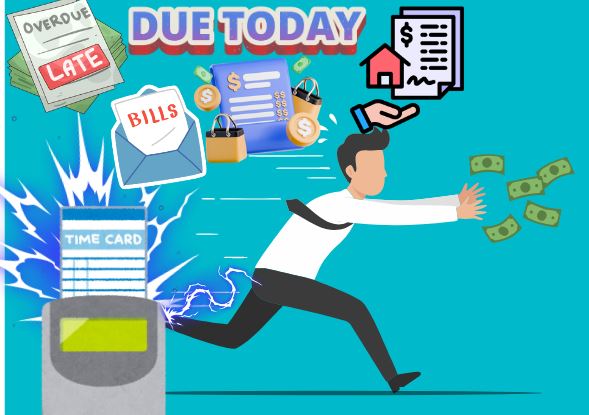
Most payroll problems don’t start with employees doing something wrong. They start with systems that don’t match reality.
In EVS, employees are repeatedly told to “check your timecard before payroll closes.” That sounds reasonable — until you look at the actual conditions workers are dealing with.
If you’re off on Friday, there is no way to check your timecard from home. Payroll systems are only accessible on-site. UCPath doesn’t show timecards. Wall clocks show limited, confusing summaries. The only place that shows clear, real-time balances in a way most people can understand is the Ecotime desktop app — which you can only access at work.
So workers are being instructed to verify information they are structurally blocked from seeing.
When timecards are wrong, the impact is immediate and real. Missing hours mean smaller checks. Smaller checks mean rent stress, late bills, childcare issues, and financial anxiety — especially for the most underpaid workers in the hospital.
This didn’t happen by accident.
The current payroll crisis is the result of unilateral process changes that removed working safeguards and replaced them with systems that look efficient on paper but fail in practice.
Previously, attendance reporting and payroll corrections followed a structured, layered process. Absences were reported through clear, accessible channels. Attendance information was organized by shift. Errors were caught early. Corrections were made before timecards finalized. Payroll issues were the exception, not the rule.
Those processes were removed.
They were replaced with centralized, one-size-fits-all systems that assume perfect conditions: uninterrupted access to technology, uninterrupted staffing, uninterrupted attention, and zero margin for human error. When those assumptions collide with the reality of a department with 550+ staff members and 24/7 operations, the system breaks — and it breaks on the backs of workers.
Instead of stabilizing the process when problems became obvious, the response has been to double down and shift responsibility downward. Employees are told they should have checked. Supervisors are told to do more with less. Workers are blamed for errors created by systems they didn’t design and can’t control.
Payroll delays aren’t caused by “forgetful employees.” They’re caused by bottlenecks, restricted access, delayed entries, and the removal of checks and balances that once prevented these exact outcomes.
One of the clearest examples is accrual timing. Official payroll calendars show when leave is earned and when it becomes usable. But system delays mean accruals often don’t appear for days after they’ve already been earned. During that gap, workers are marked leave-without-pay for time they are entitled to use. Even when this is later corrected, the damage has already been done.
Short checks don’t feel like “technical issues” to the people living with them. They feel like punishment for trying to follow rules that keep changing.
This isn’t about resisting change. It’s about accountability.
When processes are implemented unilaterally — without input from the people who actually use them — failures are predictable. When those failures harm workers’ pay, they are no longer just “process issues.” They are wage issues.
A functioning payroll system doesn’t rely on perfect timing, perfect access, or perfect behavior. It builds in redundancy, clarity, and support. When those safeguards are removed, confusion becomes the default — and workers pay the price.
Time shouldn’t be slipping into confusion. And nobody should be a day late and $200 short because of a system that refuses to correct itself.
Who to Report Wage Problems To (California)
If your paycheck is short, delayed, or inaccurate — and the issue isn’t being fixed internally — you have the right to report it. Wage problems are not “payroll misunderstandings.” They are regulated.
In California, these are the primary places workers can turn to:
The California Division of Labor Standards Enforcement (DLSE)
Also known as the Labor Commissioner’s Office. This is the main agency that enforces wage and hour laws in California. They handle unpaid wages, late pay, incorrect pay, and failure to pay earned time. You can file a wage claim even if the employer says the issue is “still being worked on.”
The California Department of Industrial Relations (DIR)
DLSE operates under DIR. DIR oversees labor standards enforcement statewide and publishes guidance on wage laws, payroll obligations, and employee rights.
The U.S. Department of Labor (DOL)
If wage issues involve repeated underpayment, systemic payroll failures, or federal wage laws, complaints can also be filed at the federal level. This can be especially relevant when patterns affect large groups of workers.
For public-sector employees covered by a union, issues tied to unilateral changes in working conditions or payroll processes may also fall under the jurisdiction of the Public Employment Relations Board (PERB). PERB handles violations related to bargaining obligations and interference with protected rights.
Before filing anywhere, workers should document everything:
dates, screenshots, copies of pay stubs, emails, unanswered requests, and any instructions that prevented access to timekeeping systems. Documentation matters — especially when problems repeat.
Reporting a wage issue is not retaliation. It is not “making trouble.” It is using the protections that exist because payroll errors have real consequences for rent, food, childcare, and basic stability.
Below, we collected some attendance policies that we thought may be of interest to our coworkers.
PPSM 2.210 iii (a, c, d)

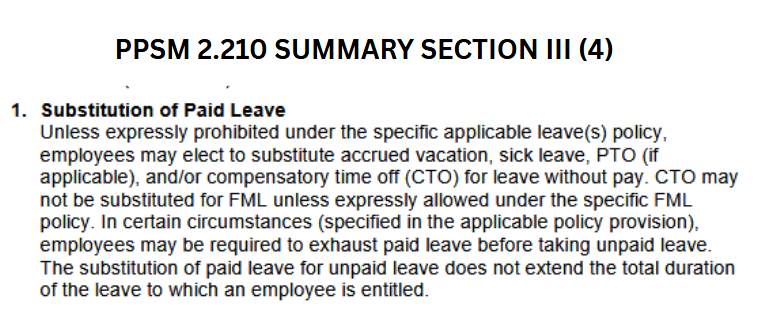
PPSM 2.210 iii (a1)
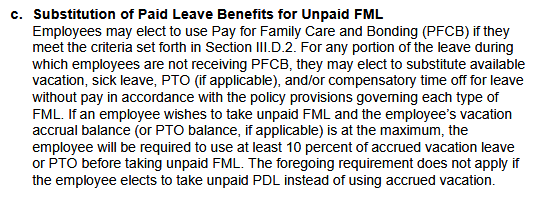
PPSM 2.210 iii C (1-4)

PPSM 2.210 B(4)

PPSM 2.210 3-B(5)
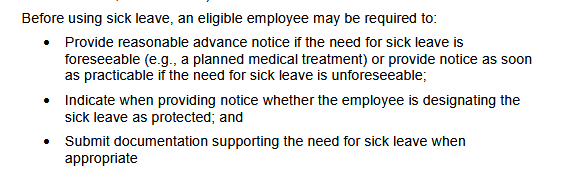
PPSM 2.210 2-(G1, 2)
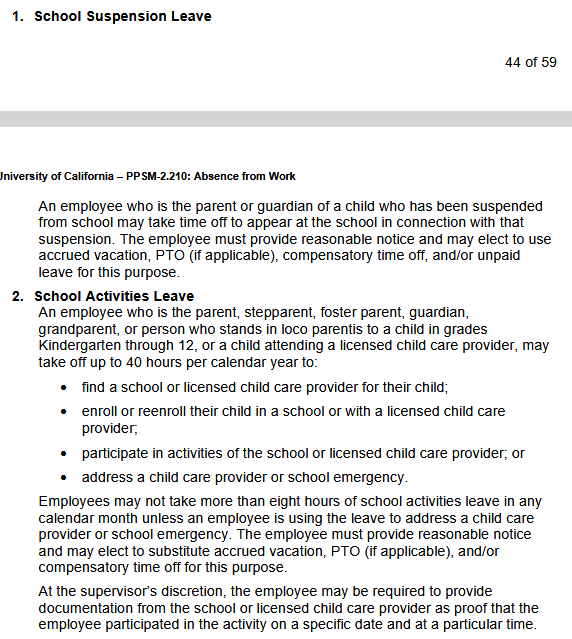
PPSM 2.2103 (A-1), D(1-E)
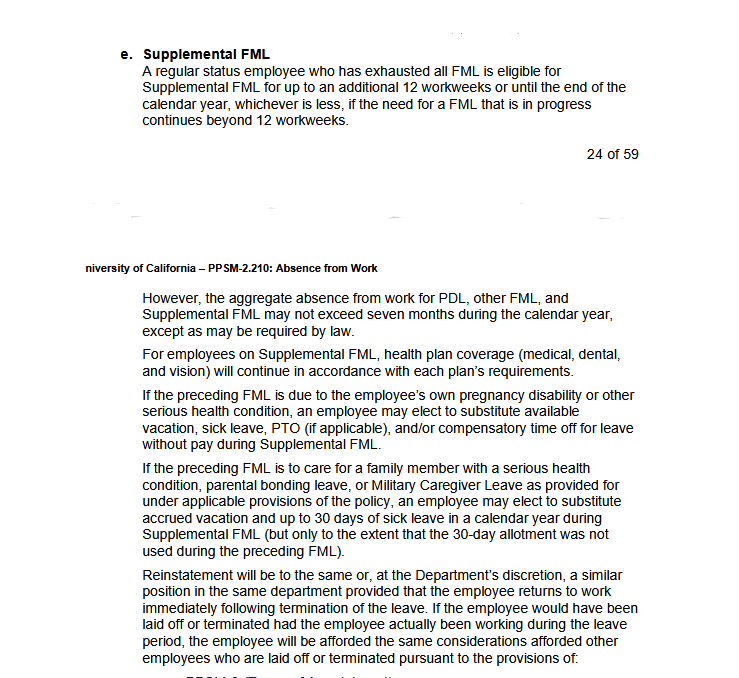
PPSM 2.210 D1(12-D)

 EVS LIVES MATTER
Leave a comment