Whenever you go into a business agreement with someone, you put it in writing.
Not because you expect things to go bad — but because clarity prevents things from going bad.
When expectations aren’t clear, that’s when misunderstandings happen. That’s when people say, “That’s not what I meant,” or “That’s not what I agreed to.”
And that’s how relationships fall apart.
A written contract lays everything out in black and white. What you agreed to do. What they agreed to do. What happens if something changes. It protects both sides.
It doesn’t create conflict.
It prevents it.
That’s not about distrust. It’s about structure.
And in the workplace, structure matters.
Leadership strategies change. Budgets shift. Priorities move around.
Contracts don’t.
There’s been a lot of talk about the AFSCME 3299 SX contract being “expired.”
Yes — the contract’s end date passed. Negotiations are ongoing.
No — that does not mean protections suddenly disappeared.
When a union contract expires and bargaining continues, the existing terms don’t just vanish overnight. Wages, working conditions, and core provisions stay in place while a new agreement is negotiated.
Expired does not mean erased.
Now here’s something else that matters — especially for newer staff.
Hospital policy and union contract language are not the same thing.
Hospital policies can be updated. They can be reinterpreted. They can shift depending on priorities or leadership direction.
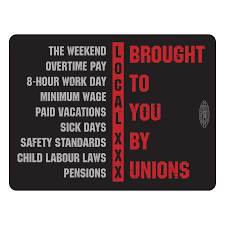
A negotiated contract sets defined standards. It limits how certain policies can be applied. It creates procedures that must be followed.
That’s not about having a “good boss” or a “bad boss.”
It’s about stability.
You might get along great with your supervisor. That’s a bonus. But workplace protections shouldn’t depend on personality or whether you’re in someone’s good graces.
Without a union, hospital policy becomes the only rulebook. And policy alone leaves a lot more room for interpretation.
When someone says, “You don’t really need the union,” what they’re really saying is, “Trust the institution to always interpret its own policies in your favor.”
Sometimes that works out.
Sometimes it doesn’t.
The contract reduces guesswork.
Another thing that’s important to understand:
Union activity is protected activity.
Asking questions about the contract.
Attending meetings.
Speaking with a steward.
Supporting bargaining efforts.
Those are legally protected rights. An employer cannot punish someone simply for participating in union-related activity.
The point isn’t to create conflict.
The point is that you are allowed to exercise your rights without fear.
And if anyone ever makes you feel like even asking questions about representation is risky — that’s something worth thinking about.
Now let’s talk about strikes.
Strikes aren’t usually about having a “mean boss.”
They happen when negotiations over basic economic issues stall — wages, staffing, healthcare premiums, retirement, job security.
When AFSCME Local 3299 members struck over increases in healthcare costs, that wasn’t drama. That was about take-home pay. When premiums go up, your net pay goes down. That’s paycheck math.
Collective bargaining is how workers push back on those increases.
When workers stand together — whether that’s on a picket line, at a meeting, or simply by maintaining membership — their collective voice carries more weight than any individual complaint ever could.
Lower membership means less leverage at the table.
Less leverage means weaker bargaining power.
That’s not ideology.
That’s math.
You don’t have to agree with everything the union does. You don’t have to love every steward. But it’s important to understand the difference between policy and negotiated protection.
If you’re new and hearing mixed messages, ask questions. Ask the union directly. Don’t rely on hallway commentary — from anyone.
You don’t have to pick sides.
But make your decisions based on facts — not fear.
In Solidarity.
 EVS LIVES MATTER
Leave a comment